
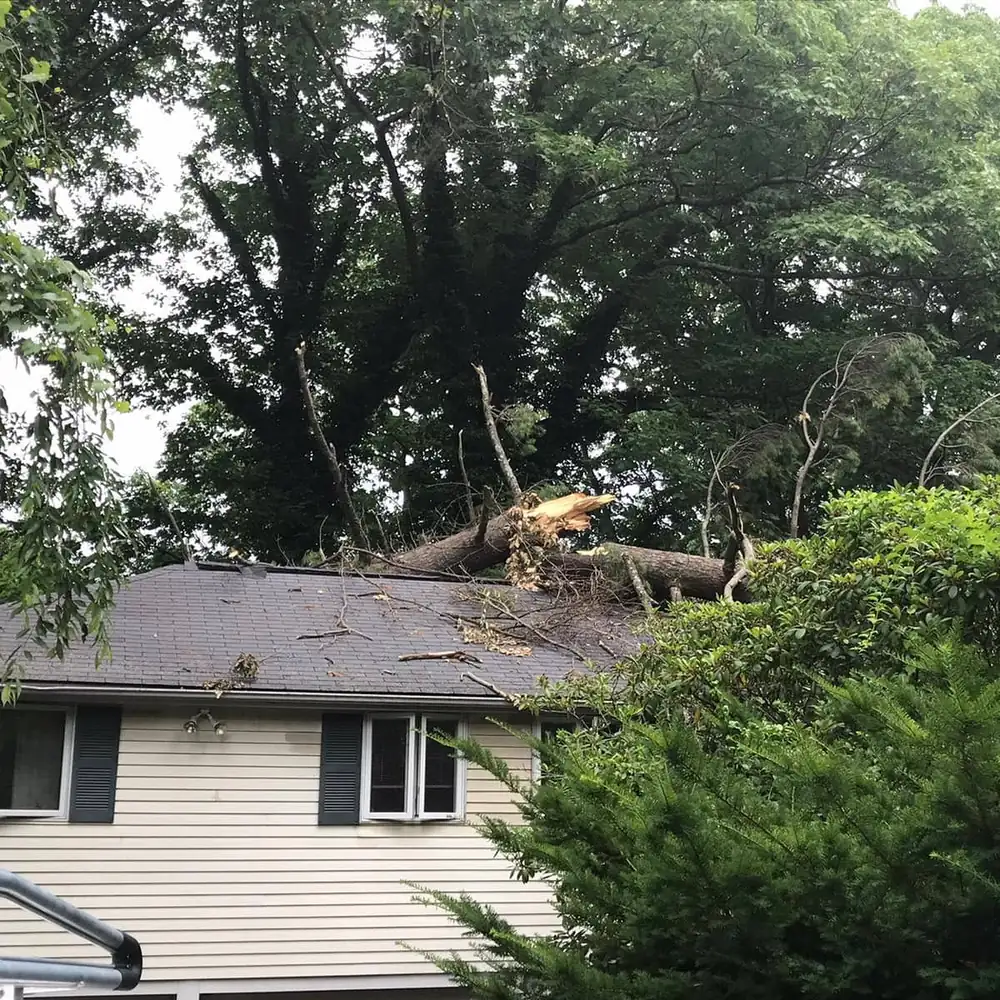
A fallen tree, split trunk, hanging limb, or tree resting on a structure can create an unstable work area. Keep people away from the hazard and contact a professional tree service for an assessment before attempting to move or cut material.
Storm-damaged trees can remain under tension, and branches may shift without warning. Avoid standing beneath damaged limbs, touching a tree near utility lines, or using a ladder or chainsaw around unstable wood.
Professional response begins by identifying the immediate hazard, the condition of the tree, what the tree is contacting, and the safest sequence for controlled removal. Equipment needs depend on access and the way the tree has failed.
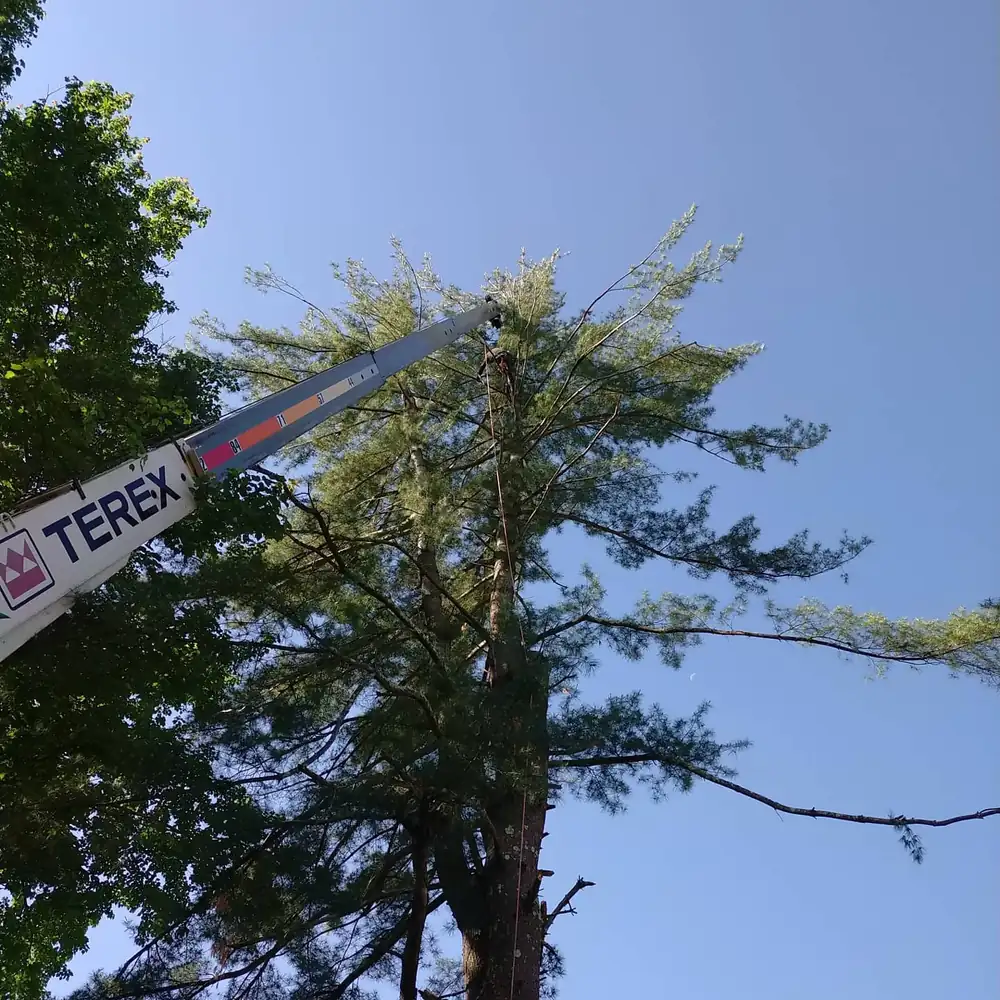
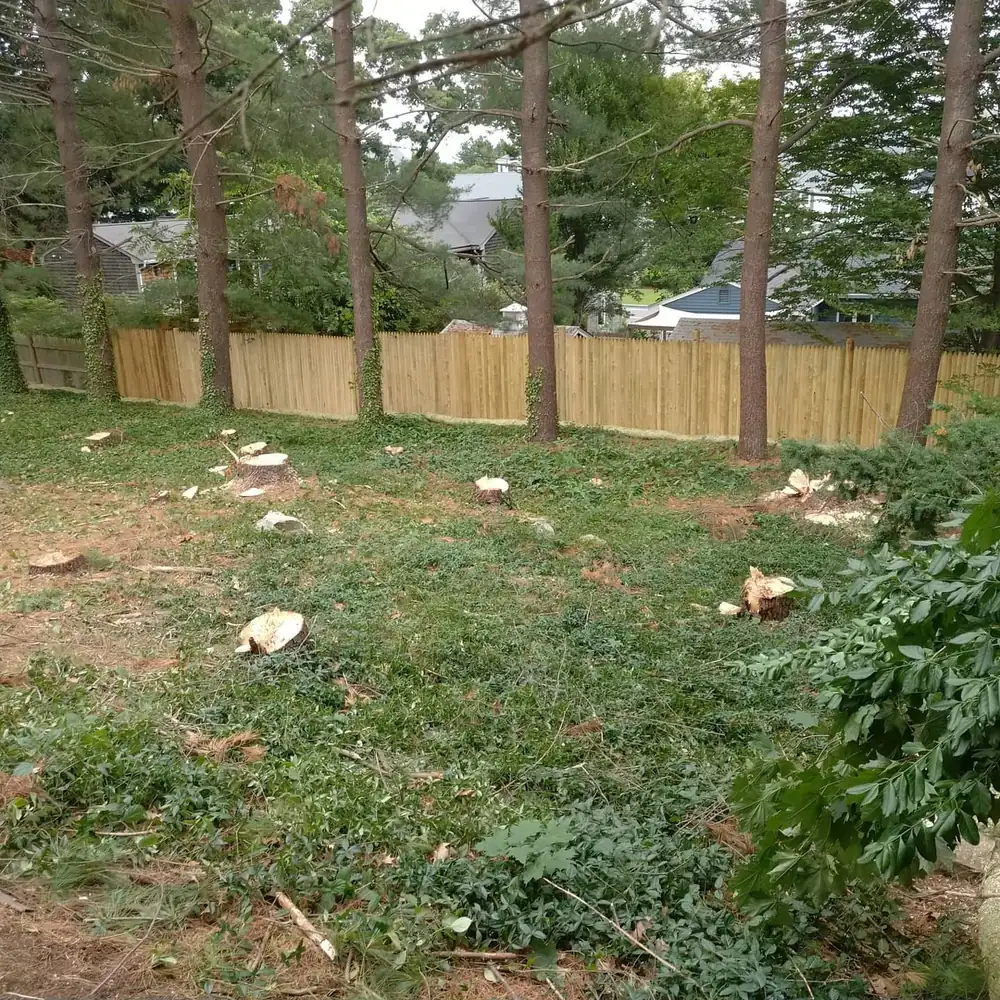
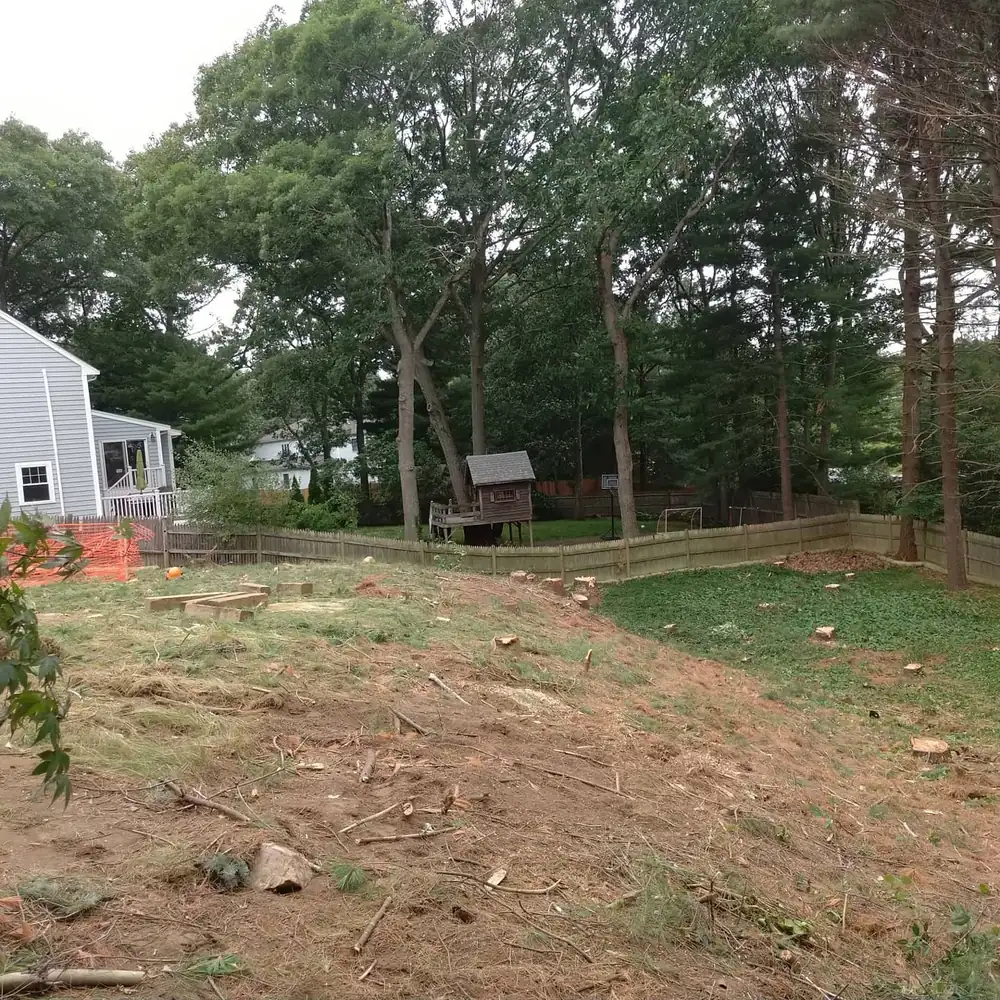
The service scope may include removal of hanging or fallen sections, controlled dismantling of damaged trees, cutting wood into manageable pieces, debris removal, and cleanup. If utility lines are involved, contact the utility and emergency services as appropriate.
Call (410) 593-1680 and describe what fell, what it is touching, and whether utility lines may be involved.
To discuss emergency tree service in Pasadena or a nearby service area, call (410) 593-1680 or request a site-specific quote.
Keep everyone away from the tree and anything it is touching. If a power line is involved, call BGE first and treat every wire as live. Our storm-damaged tree safety guide explains what to do while you wait.
Storm-loaded trees are unpredictable: wood can be twisted under tension, and roots may be partly torn. The crew first stabilizes the situation, then removes the weight from the structure in controlled pieces, often with rigging or a crane for trees on roofs. Once the hazard is cleared, remaining wood, debris and cleanup are scheduled as a normal job.
Take photos of the tree and damage from several angles before any work begins, and keep a copy of the invoice and scope for your adjuster. Many homeowners policies cover removal when a tree damages a covered structure, but coverage varies, so confirm with your insurer.
Get everyone out of the affected area, stay away from any downed wires, and call BGE if lines are involved. Then call (410) 593-1680 so the tree can be safely removed from the structure.
Coverage depends on your policy. Insurers commonly cover removal when a tree damages a covered structure. Take photos before work starts and keep the invoice for your claim.
No tree crew should work on energized lines. Report lines to BGE first; once the utility has made the area safe, the tree and debris can be removed.