
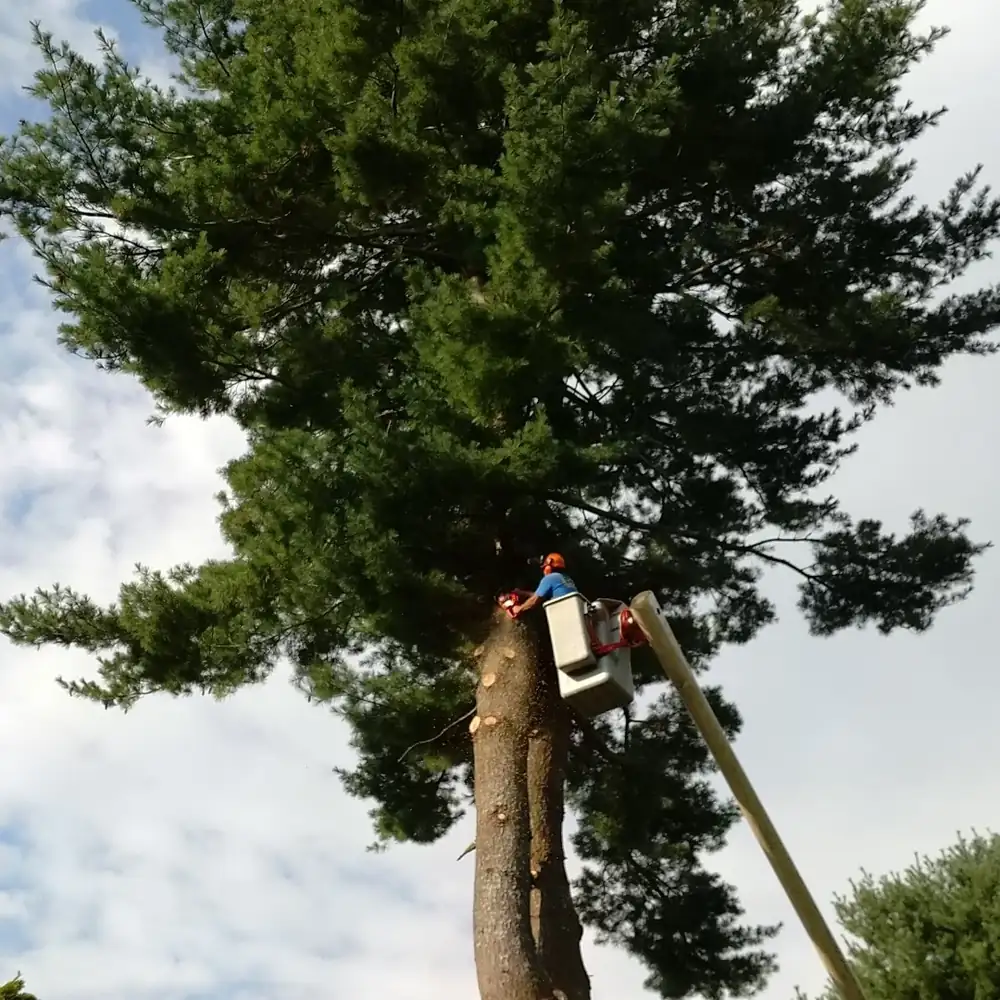
Selective trimming and pruning can improve clearance, remove deadwood, and address branches that interfere with roofs, windows, walkways, and usable outdoor areas. Each cut should support the tree's condition and the practical needs of the property.
The appropriate approach depends on branch size, attachment, position, and the amount of live crown involved. Work may include crown thinning, crown raising for clearance, selective reduction, or removal of dead and damaged branches.
Large or elevated branches call for suitable access and controlled cutting. When climbing or aerial equipment is needed, the work plan considers drop zones, nearby structures, and how cut material will be lowered or removed.
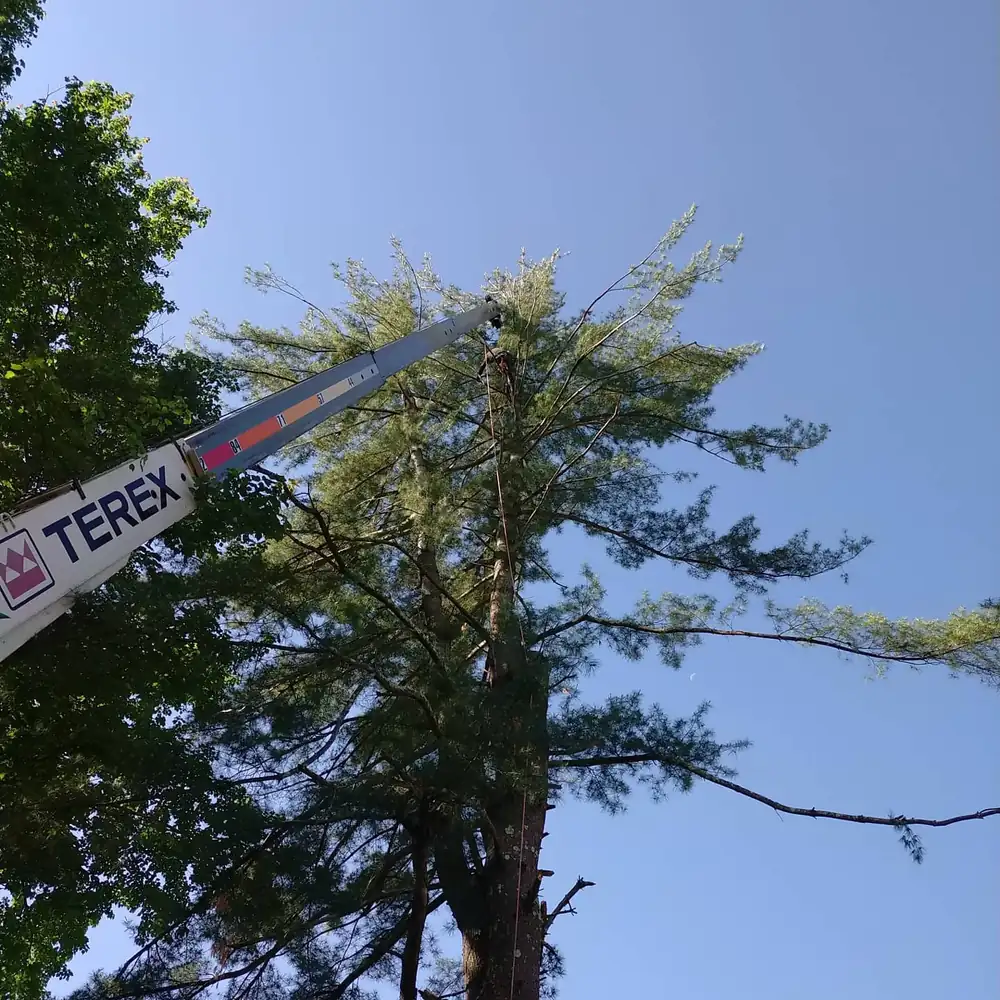
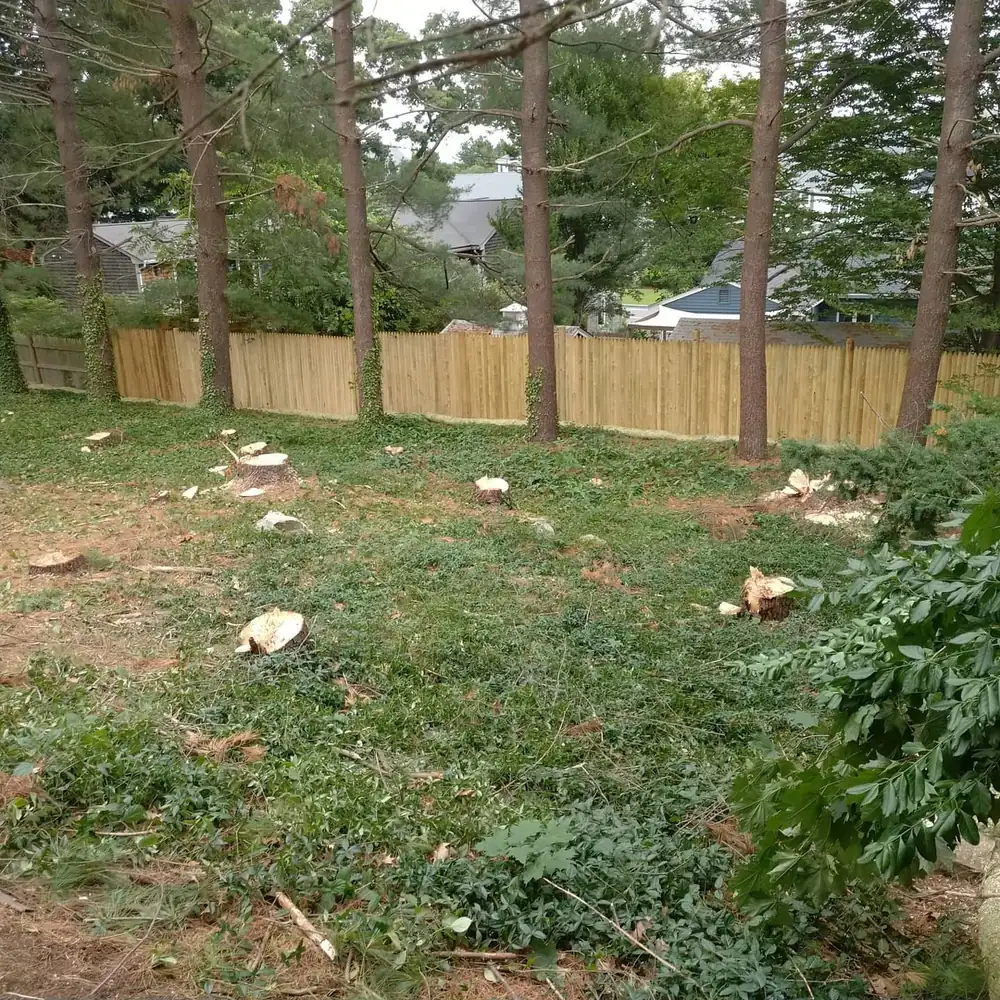
Pruning is not simply cutting branches shorter. Cuts are selected around branch unions and visible defects, and the amount removed is considered carefully. Afterward, branches and debris can be removed so the property is left orderly.
Timing depends on the species, tree condition, and goal of the work; a professional assessment is the best starting point.
To discuss tree trimming & pruning in Pasadena or a nearby service area, call (410) 593-1680 or request a site-specific quote.
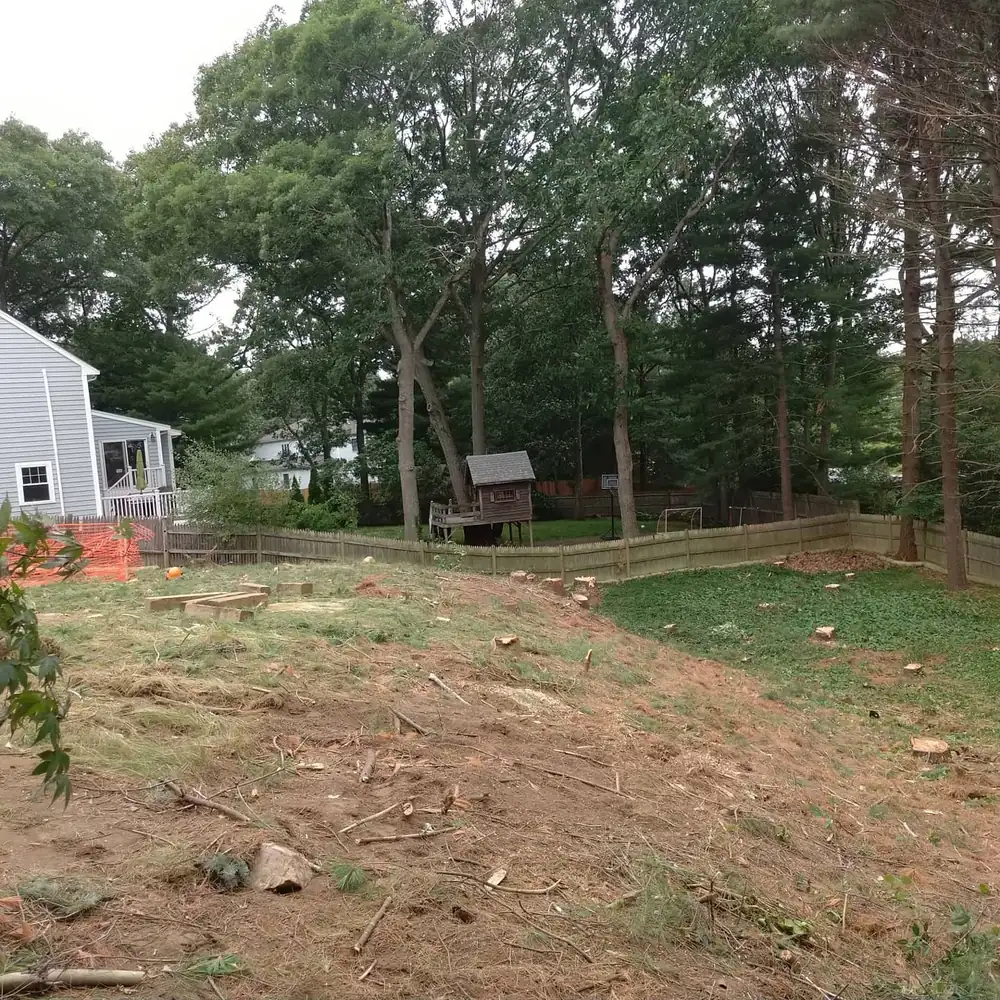
Every cut is made just outside the branch collar so the tree can seal the wound. Trees are never topped, because topping causes decay and weak, fast regrowth. On tall oaks and poplars, work is done by climbing arborists or from an aerial lift so branches can be lowered under control. For more on choosing the right service, see tree trimming vs. tree pruning.
Summer thunderstorms, nor'easters and the remnants of tropical storms regularly test trees in Pasadena and across Anne Arundel County. Thinning dense crowns and removing deadwood before storm season is one of the most practical ways to reduce limb failures over your home. If a tree is already damaged, emergency tree service is available.
Late winter, while trees are dormant, is a good time for most structural pruning because branch structure is easy to see and many pests are inactive. Deadwood, storm-damaged limbs and clearance cuts can be handled any time of year.
Well-planned pruning usually removes a modest portion of the live canopy at one time. Removing too much foliage stresses the tree and can trigger weak regrowth, which is why topping is not used.
Yes. Roof and gutter clearance is one of the most common requests. Limbs are cut back to a proper branch union and lowered so they do not damage shingles or gutters.