
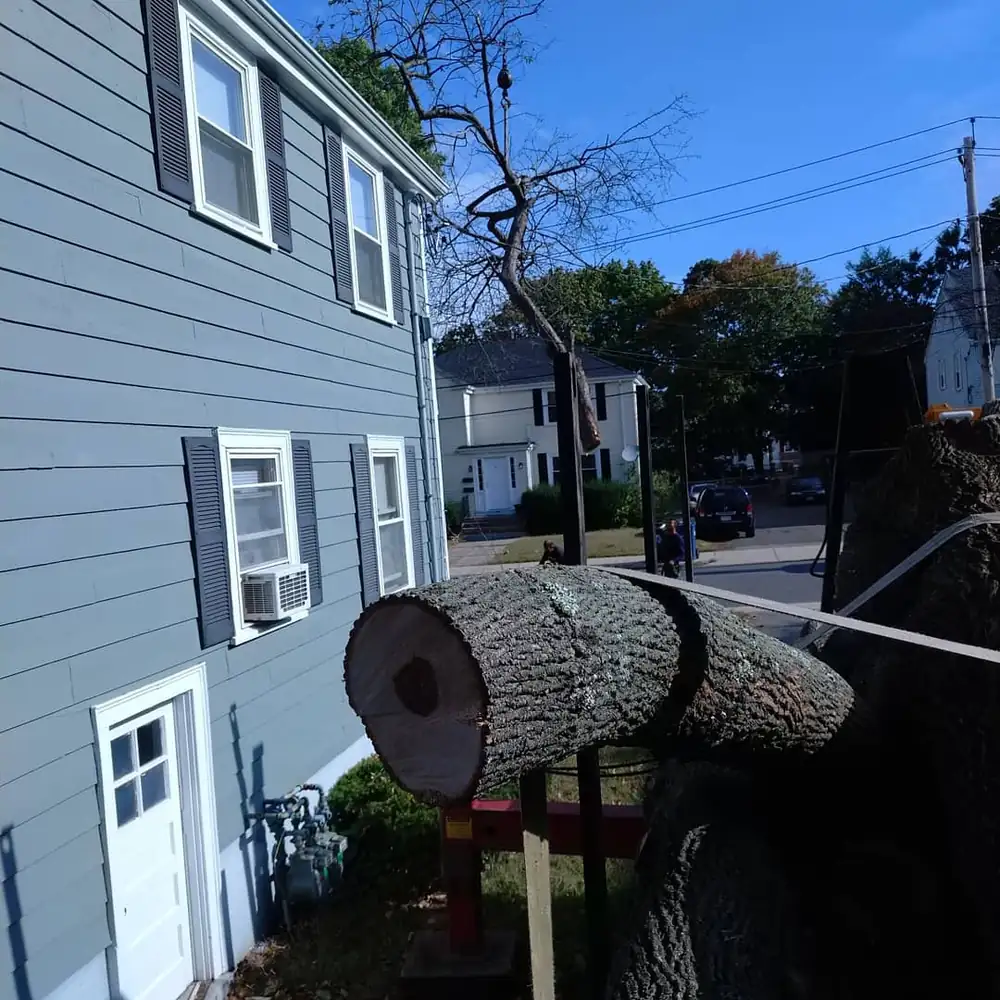
Stump Work
The terms trimming and pruning are often used together, but the goal of the work is more important than the label. Good tree care begins with a reason for each cut, whether the objective is clearance, deadwood removal, structure, or a specific branch concern.

Removing too much live crown at one time can stress a tree, so the amount and location of pruning should be considered carefully.
Safety Note / Professional Assessment Recommended
Start with the goal, not just the branch length
Trimming often describes managing branches for clearance or appearance. Pruning is commonly used for more selective work tied to dead, damaged, crossing, or poorly attached branches and to crown structure. Common approaches can include crown raising for low branches, selective crown thinning, and removal of deadwood. Large or elevated branches may require climbing, aerial equipment, rigging, or other controlled methods.
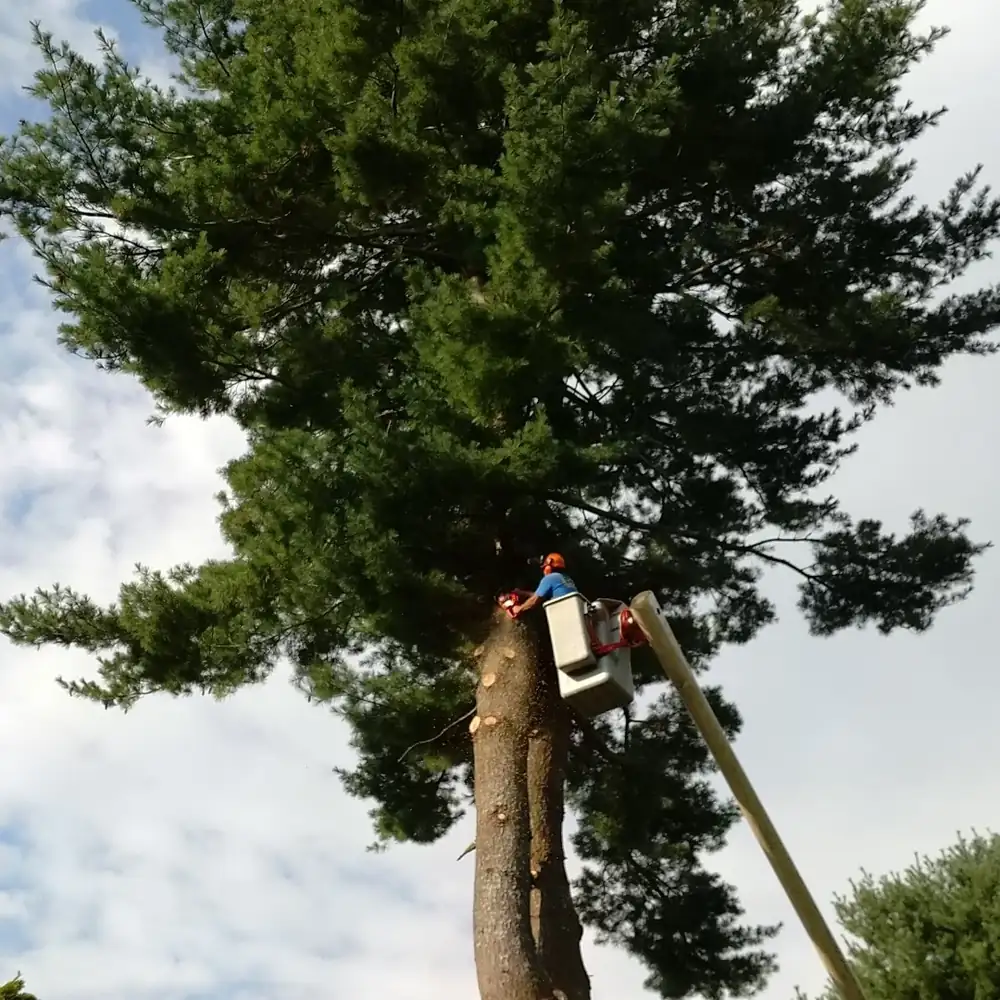
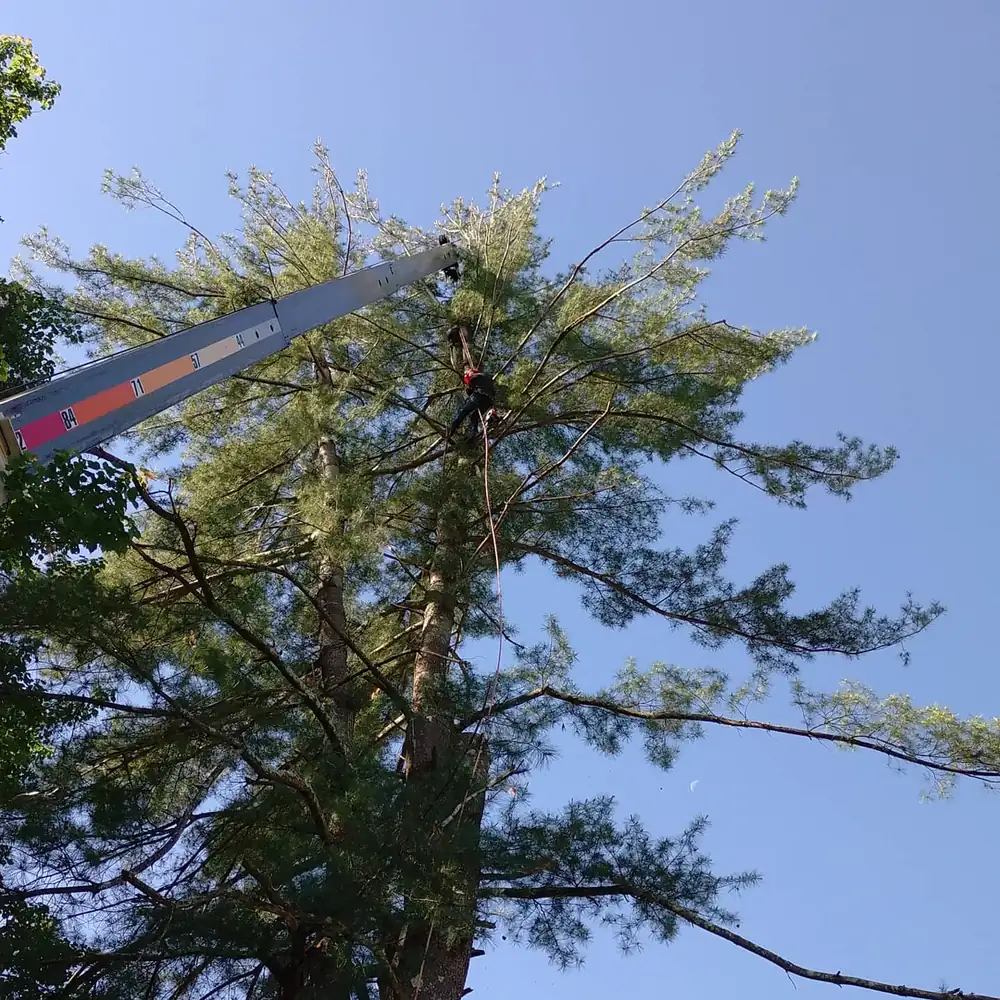
A professional assessment can identify which branches should be addressed and how much live growth should remain. To discuss tree trimming or pruning in Pasadena, Maryland, call (410) 593-1680.
Trimming and pruning at a glance
| Tree trimming | Tree pruning | |
|---|---|---|
| Main goal | Shape, clearance and appearance | Health, structure and safety |
| Typical cuts | Cutting back overgrown branches and shrubs | Removing dead, diseased, crossing or weak branches |
| Common timing | As needed for clearance | Often in late winter dormancy; deadwood any time |
| Best for | Branches over roofs, walks and driveways | Mature trees, young trees needing structure, storm prep |
In everyday use, people say "trimming" for both. What matters is that every cut is made in the right place and for a clear reason.
What a good pruning cut looks like
Branches should be removed just outside the branch collar, the slightly swollen area where a branch meets the trunk. Cutting flush to the trunk, or leaving a long stub, slows the tree's ability to seal the wound and invites decay. Large limbs are removed in stages so the bark does not tear.
Why topping is not a shortcut
Topping, cutting a tree's main stems back to stubs, may seem like a quick way to make a big tree smaller. It leaves large wounds that decay and triggers dense, weakly attached regrowth that is more likely to break in storms. Crown reduction and thinning by a trained arborist are safer alternatives. Learn more about our tree trimming and pruning service.
Keep the Work Area Clear
Practical Step
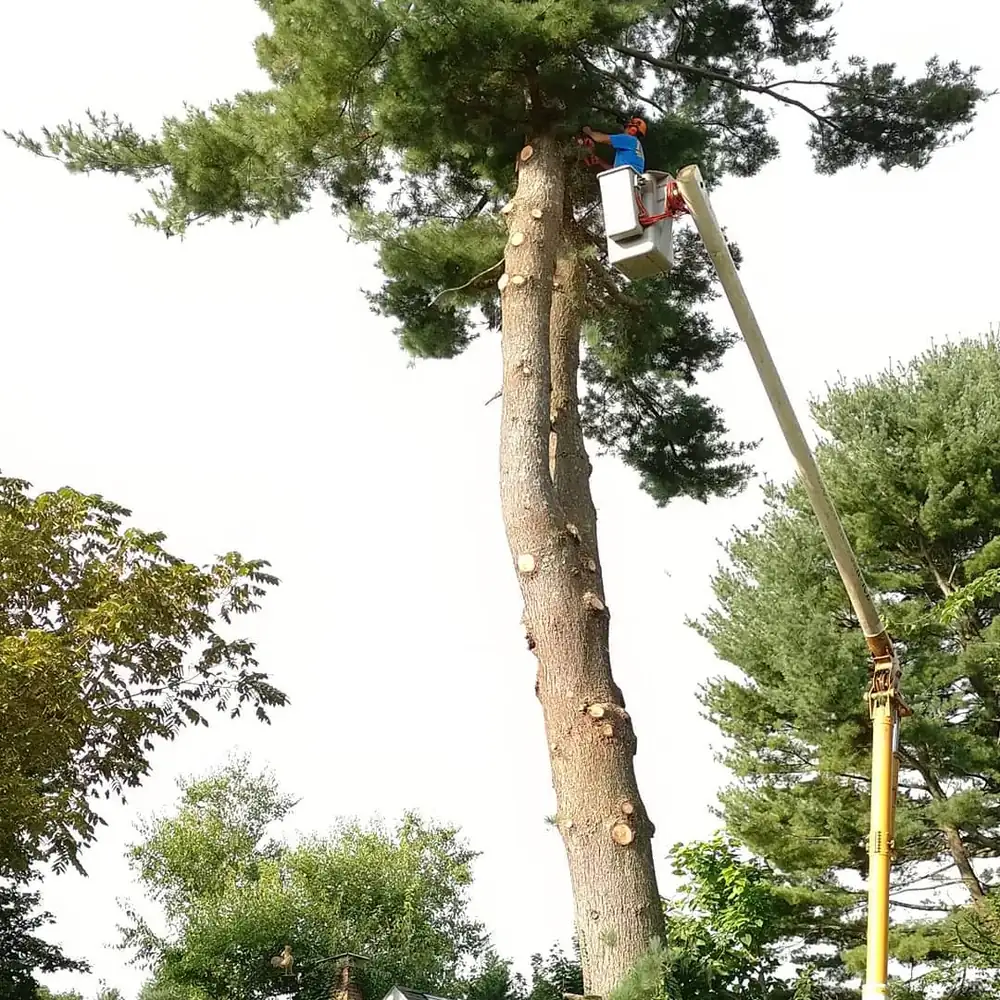
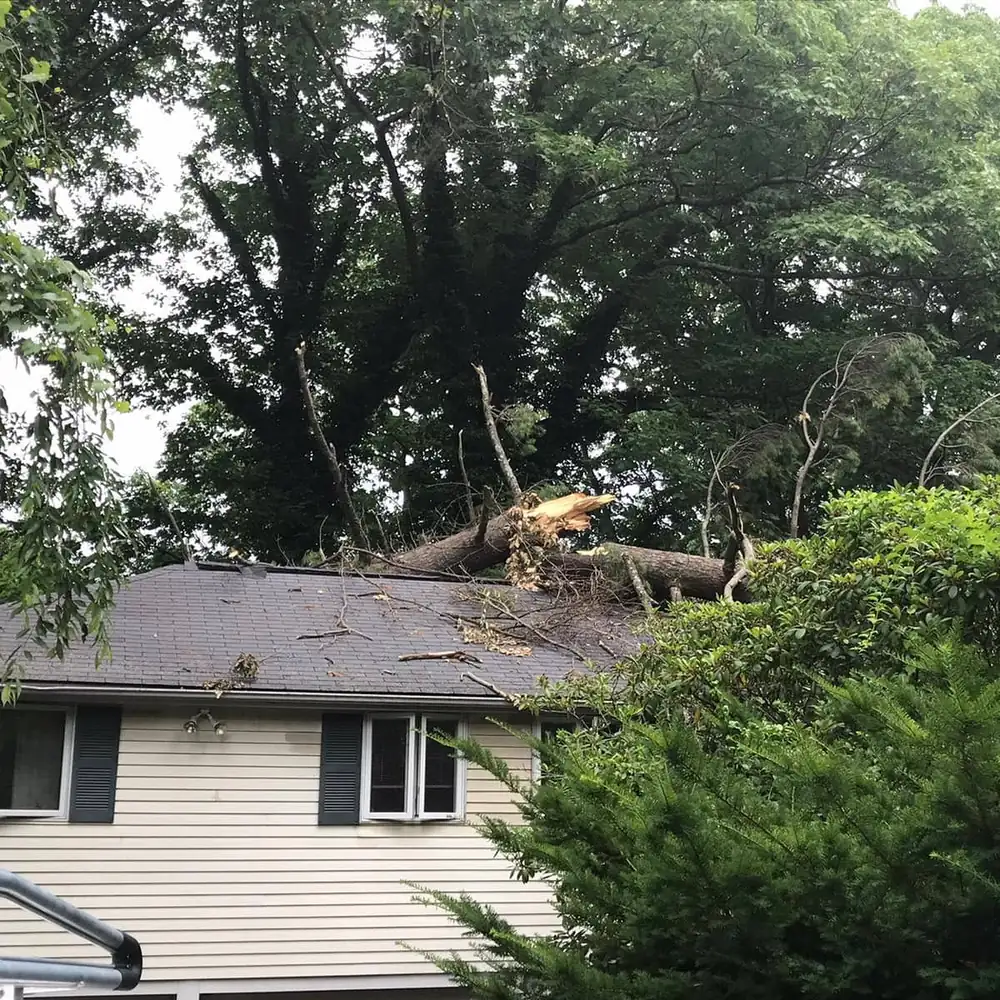
Keep people and pets away from damaged trees and from the agreed work zone while professional tree service is underway.