
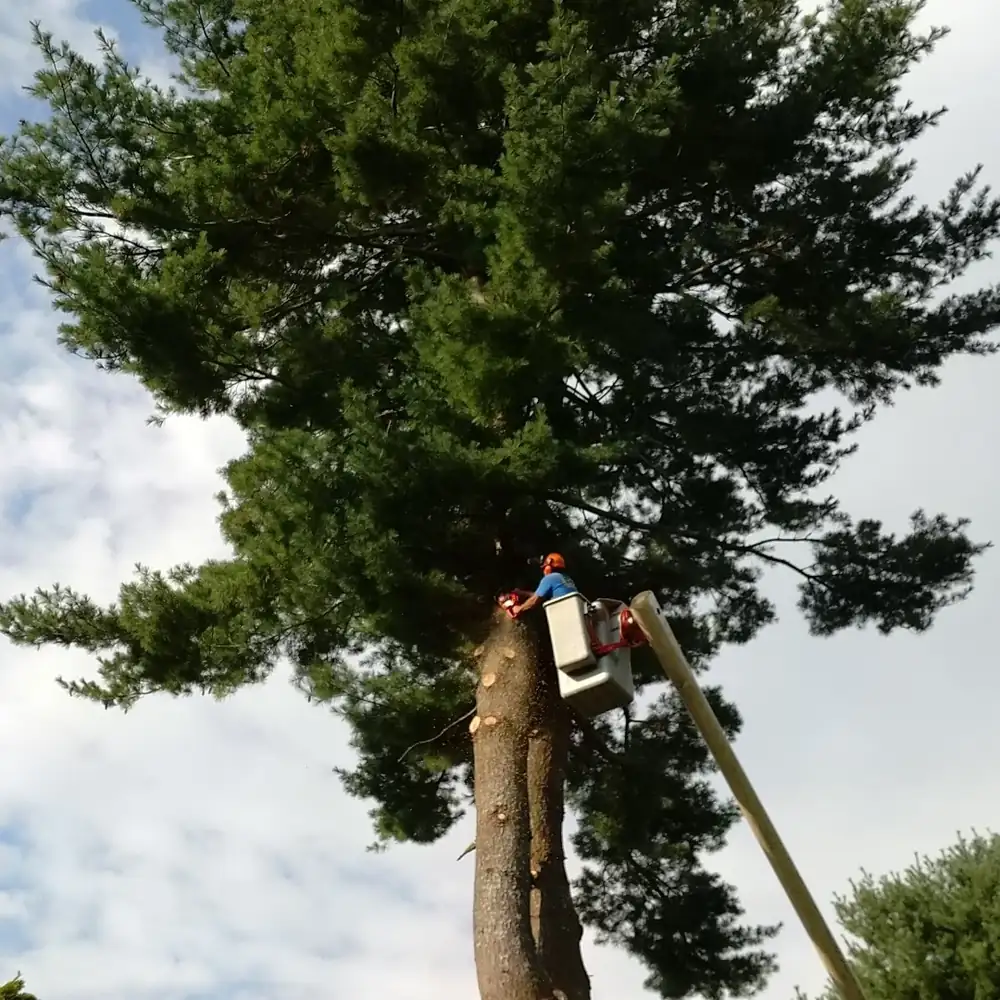
Pruning
A tree can look imposing and still be structurally sound, while a less dramatic defect may deserve prompt attention. Homeowners should look for changes in the whole tree and avoid making a removal decision from one symptom alone.

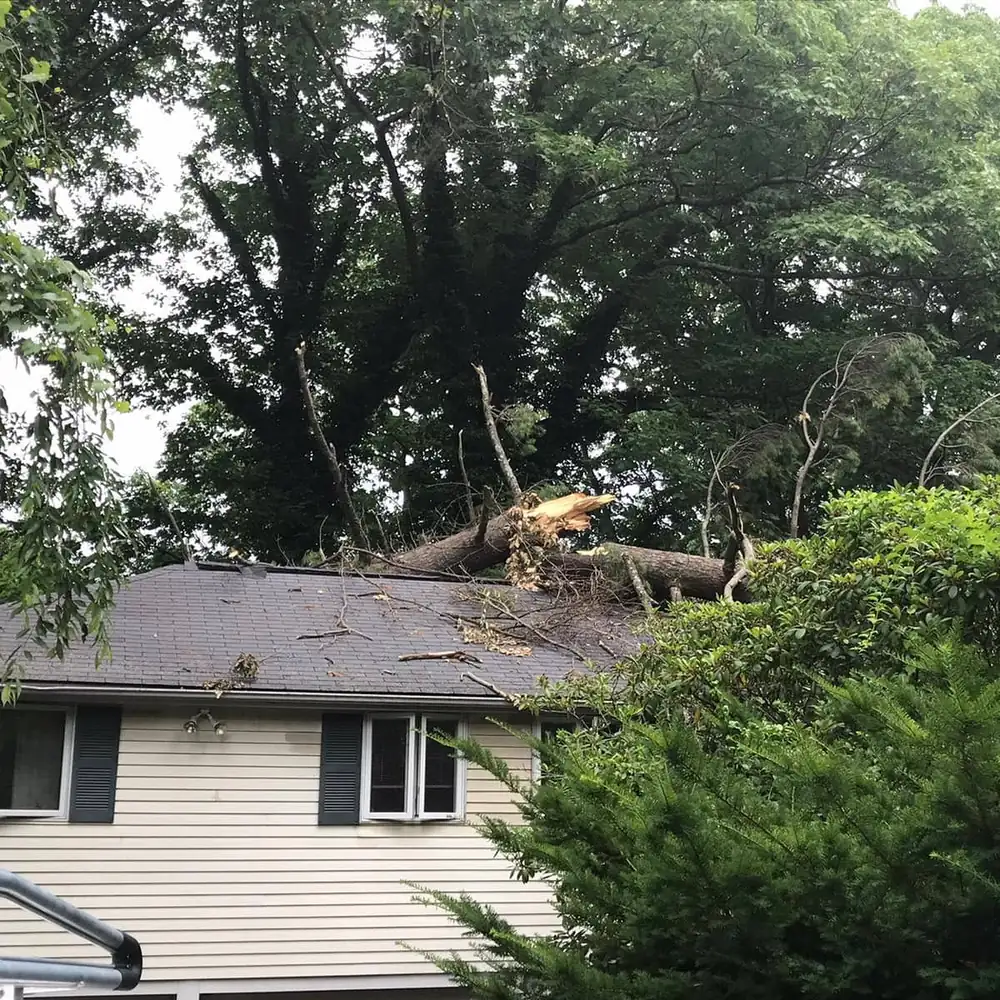
A tree that is leaning, split, dropping large limbs, or contacting utility lines should be kept clear until a qualified professional can evaluate the situation.
Safety Note / Professional Assessment Recommended
Warning signs worth a professional assessment
Large dead sections, new cracks, a split trunk, extensive decay, uprooting, or a sudden change in lean can indicate a serious problem. Repeated branch failure, sparse foliage across much of the crown, and fungal growth near major roots are also reasons to request an evaluation. Context matters. A defect over an unused wooded area presents a different concern than the same defect above a roof, driveway, or play area. A professional can consider both the tree's condition and what could be affected if part of it fails.
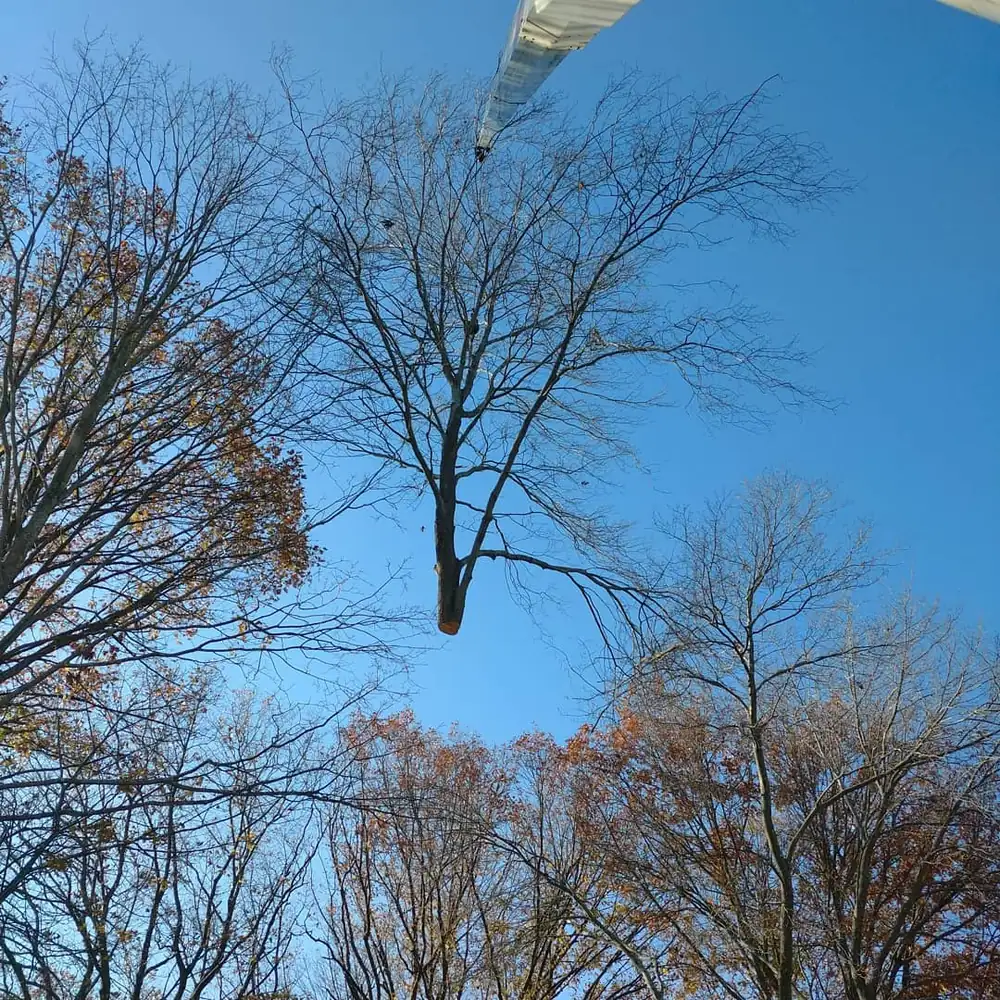
Removal is not the only possible outcome. Pruning, deadwood removal, monitoring, or disease-related care may be appropriate in some cases. For a tree that appears hazardous or unstable in Pasadena, call (410) 593-1680 for a professional assessment.
Seven signs to look for
- Large dead limbs or a dead top. Bare branches in summer, or bark falling away from big limbs, mean that wood is dead and can break without warning.
- Cracks and splits. Vertical cracks in the trunk, or a split where two main stems join, are structural defects.
- Decay and cavities. Hollow areas, soft wood, and mushrooms or conks on the trunk or root flare point to internal rot.
- Root problems. Soil heaving on one side, exposed broken roots, or roots cut during construction can make a tree unstable.
- A new or increasing lean. A tree that has always leaned is different from one that started leaning after a storm.
- Thinning crown. Sparse, small or yellowing leaves across much of the canopy for more than one season.
- Repeated limb failure. A tree that keeps dropping branches is telling you something.
Trees common in Pasadena that deserve a closer look
In Anne Arundel County, tall loblolly and Virginia pines are prone to snapping in wind, especially when the crown is heavy and the trunk is thin. Tulip poplars grow fast and can shed large limbs. Aging oaks may hide decay at the base. None of these species is a problem by itself; what matters is the tree's condition and what it could hit.
What happens during an assessment
A professional looks at the whole tree, from the root flare to the top, and at the targets around it: the house, driveway, play areas and neighbors' property. The outcome may be pruning or deadwood removal, monitoring, or removal when the risk cannot be reduced another way. If a tree is actively failing or already on a structure, use emergency tree service.
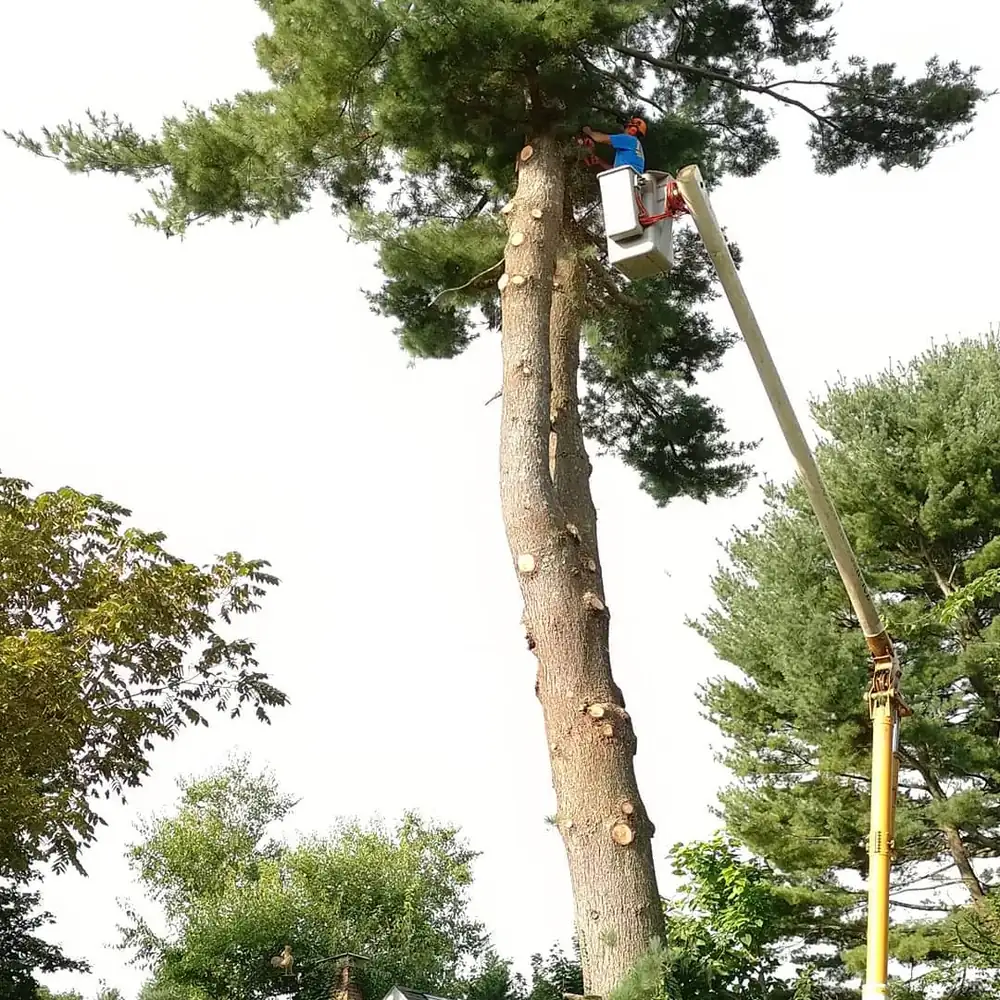
Keep the Work Area Clear
Practical Step
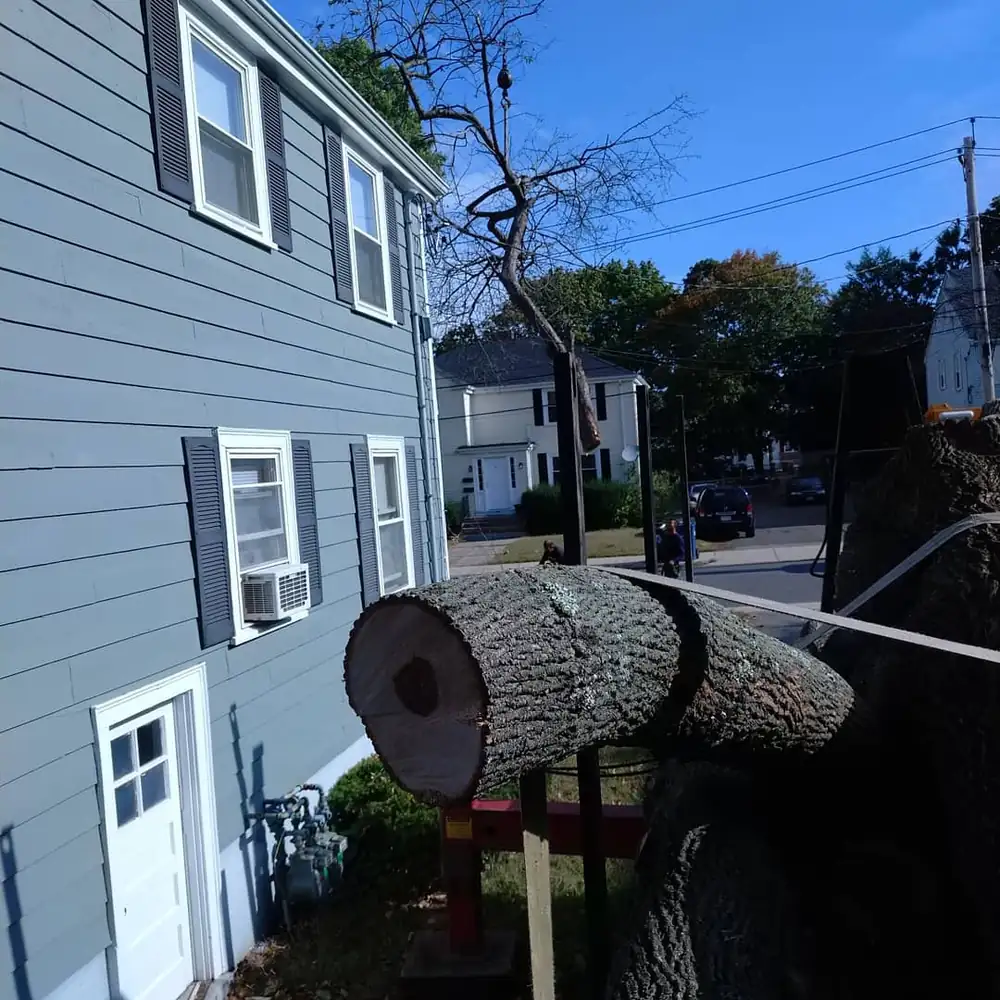
Keep people and pets away from damaged trees and from the agreed work zone while professional tree service is underway.